The Outstanding Inside Method
A simple, human framework for culture change in care homes built around 7 needs that matter for residents, staff and families.
THE LENS…
The 7 Human Needs
What every person needs.
Before we think about training, activities, audits or outcomes, we start with something more fundamental:
What does a person need in order to feel human, secure and connected to the life around them?
Outstanding Inside™ uses seven human needs as a lens for looking at the everyday experience of care.
They help us move beyond asking “What care are we providing?” towards a more important question:
“What is it like to experience this care?”
-
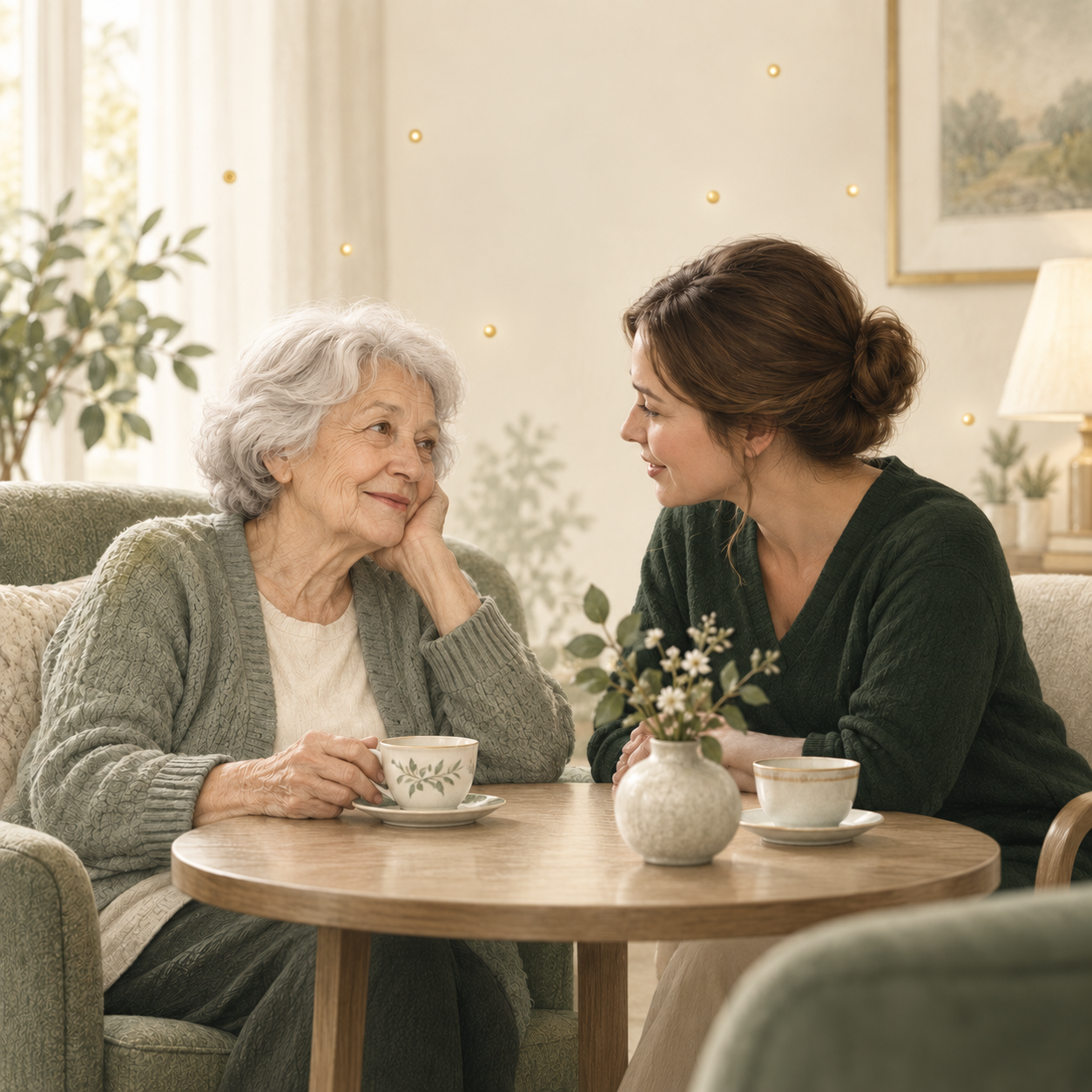
Someone notices me.
Being seen is more than being known by name.
It means somebody notices the person behind the care plan — their personality, history, preferences, expressions, routines and the small changes that tell us something may be different today.
When people feel seen, they are not simply recipients of care.
They remain individuals whose presence matters.
-
I know I am safe here.
Safety is more than preventing harm.
It is the feeling that the people around me are trustworthy, that I will be treated with dignity, that my world makes sense and that someone will notice when I need reassurance.
For someone living with dementia, safety may come through a familiar voice, an understandable environment or a predictable routine.
For staff and families, it can come from knowing they will be heard and supported.
True safety is something people experience, not simply something organisations manage.
-
My life still belongs to me.
Care should support a person's life not quietly take ownership of it.
Choice lives in ordinary moments: what to wear, when to get up, where to sit, what to eat, whether to participate and how the day unfolds.
Even when somebody needs significant support, there are still opportunities to preserve control, preference and autonomy.
Because needing care should never mean losing your voice.
-
You see the meaning behind what I do.
Behaviour does not happen in a vacuum.
Distress, withdrawal, repetition, resistance or agitation may be communicating pain, fear, confusion, boredom, frustration, an unmet need or something in the environment that simply isn't working for that person.
Understanding changes the question from:
“How do we stop this behaviour?”
to:
“What might this person be telling us?”
And when we change the question, we often change the response.
-
I still matter.
People need to know that who they are - and what they contribute - still has value.
That means asking rather than assuming. Listening rather than simply informing. Recognising strengths instead of seeing only dependency.
It can be as small as asking someone's opinion, thanking them for helping, remembering something important to them or involving them in ordinary life.
Care should never make somebody feel smaller.
-
I still belong.
Human beings are built for connection.
A conversation. A familiar face. Holding someone's hand. Sharing a joke. Sitting alongside another person. Feeling part of what is happening rather than watching life happen around you.
Connection doesn't always require an organised activity.
Often, it is created in the tiny interactions woven throughout an ordinary day.
Because being surrounded by people is not the same as feeling that you belong.
-
There is still a reason to get up today.
Meaning is deeply personal.
For one person it might be tending a garden. For another, folding laundry, listening to music, practising faith, helping somebody else, talking about grandchildren or simply having something to look forward to.
Meaningful life is not the same as a busy activities calendar.
It comes from understanding what gives this particular person purpose, identity, pleasure or connection.
We shouldn't simply fill people's time. We should help life continue to mean something.
The thinking behind the framework
The Outstanding Inside™ 7 Human Needs framework is informed by the person-centred tradition of dementia care, including Tom Kitwood's five psychological needs: comfort, attachment, inclusion, occupation and identity.
OI develops and reframes that thinking into seven accessible human needs that can be recognised in everyday practice and considered across the whole care-home community people receiving care, the people supporting them and the families who love them.
Because these aren't simply dementia needs.
They're human needs.
The ways we create change…
The Outstanding Inside Way
A person’s experience of care is shaped by more than one thing. Leadership, staff language, dementia understanding, everyday environments and daily practice all work together. Outstanding Inside approaches the home from five connected directions - each serving the same Seven Human Needs.
The Outstanding Inside Way begins with a simple belief: people should not merely be cared for - they should feel seen, safe, able to choose, understood, valued, connected and able to find meaning.
We work across the whole home, from leadership decisions and frontline conversations to mealtimes, shared spaces and the smallest interactions between scheduled activities. We call these everyday moments micro-engagements, because even the briefest encounter can shape how a person experiences their day.
Through five connected areas - culture, dementia understanding, environment, language and evidence - we notice what people experience, understand what sits beneath it, design meaningful change, embed it in everyday practice and evidence the difference.
Because outstanding care is not created only through policies or planned activities. It is created moment by moment, by everyone.
THE METHOD…
A Method for Turning Insight Into Change
The 7 Human Needs give us the lens. The OI Method gives us a way to act on what we see.

NOTICE
See the experience, not just the process.
We look beyond policies and routines to notice what everyday life actually feels like for the people experiencing it.
UNDERSTAND
Ask what sits underneath.
We explore what may be shaping what we see — looking for patterns, unmet needs and the reasons behind everyday experiences.

EMBED
Turn change into everyday behaviour.
Ideas only matter when they become practice. We help translate them into the interactions, routines and environments people experience every day.

DESIGN
Focus change where it matters.
We identify the strongest opportunities for improvement and shape practical responses around the reality of the home.

EVIDENCE
Look again and see what changed.
We return to the lived experience to make improvement visible, understand what is working and identify what needs attention next.
NOTICE → UNDERSTAND → DESIGN → EMBED → EVIDENCE ↻
Because improvement isn't complete when an action is taken. It matters when the experience changes.